
Sunny
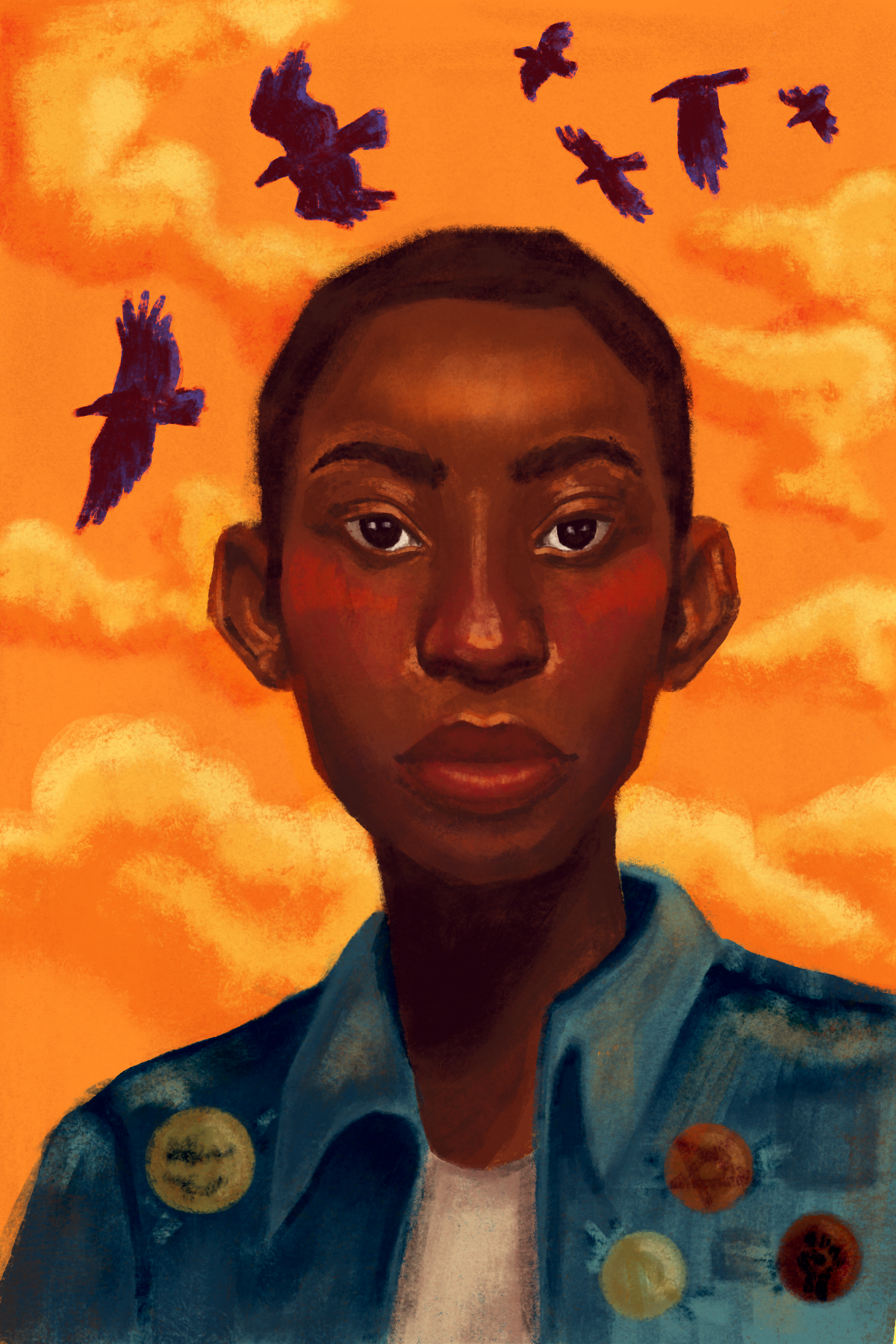
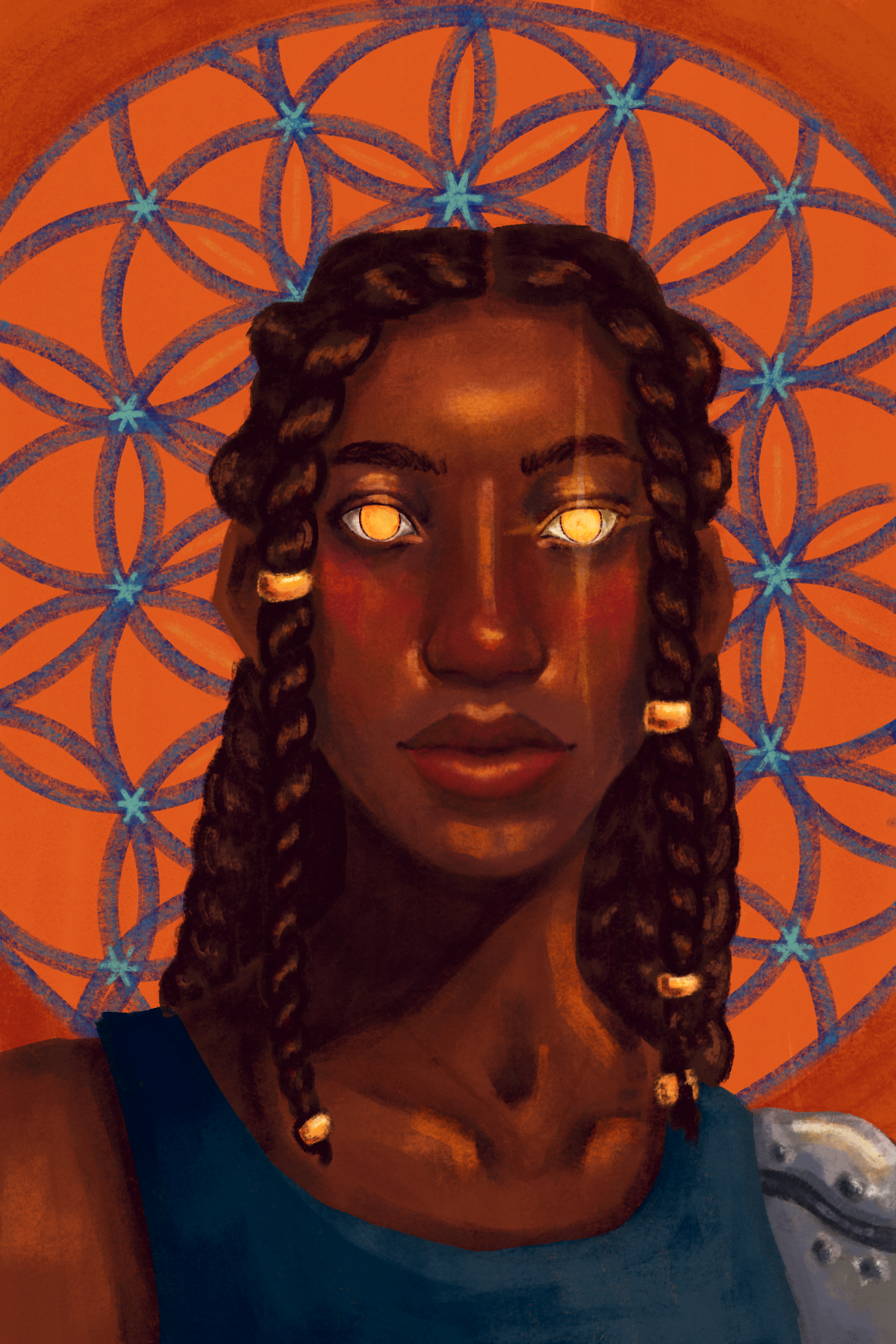
Art by Cate Standish
As Above
Driven by grit and ambition, Solara is one half of the main character line up in the story Suncatchers. Known affectionately as Sunny, she is driven by the mind — primarily seeking facts and data over emotional decision making.
Sunny’s expression may be traditionally more masculine, but her physical form and power lies in the feminine. This is Sunny’s primary challenge: becoming a creator archetype who impulsively gravitates towards efficiency and structure, not possibility.
Designed to be the actualized “Suncatcher”, Sunny is subconsciously beholden to familial responsibility — something she rejects on the surface, but secretly gives weight.
A mind-focused human that rejects emotion is forced to move down - as above, so below - to meet the nodal heartbeat in order to find balance. Through her exploration in the Void, Sunny not only finds the pieces to fulfill her destiny, but also gains clarity to be the full expression of zero-point neutrality. Letting go of everything she defines herself by seems an impossible feat, but it’s the only way to save the place she calls home.
This combination of experience and perspective align to allow full creative embodiment so she may manifest interdimensionally, creating and discerning what is necessary to progress on Yjoulai. The question always remains, however: can she finally let go of things she cannot control, or will she allow the light to lead her way?
Inspirations for Sunny
On the surface, Sunny appears as the antithesis of the Southern Belle archetype. However, as most southerner’s know, that caricature is usually wrong anyway. Blunt, driven, and gritty, Sunny is the everywoman: a person with the drive to protect her family and her home and doing whatever it takes to make that happen. Sunny is inspired by the women that lead southern communities, both in politics, education, and everywhere else.
However, just making her a hero wouldn’t be that interesting. Sunny’s power is instantaneous manifestation - and that can be good or bad. With her character, my personal experience with trauma therapy (EMDR specifically) inspired the idea of bringing the past to the present moment — and how the body can’t always tell the difference. Sunny’s emotional response to memory dictates the majority of what she encounters, whether she or the reader realize it or not. Through EMDR, patients are often confronted with trauma much like a gun in the face, at least that’s what it felt like to me. The neurological processing felt like a form of dying, one I couldn’t escape from. But being brave enough to enter that darkness created space, not just to work through the traumatic experience, but to live.
That said, Sunny’s habits of categorizing, controlling, and hiding her feelings come directly from a traumatic experience — a very typical response if one has had such an experience. That “two steps ahead” mentality becomes a hinderance, not a moral failing, because she must learn to focus on the present moment (because that’s how her power works). Sunny comes from the part of me that observes, calculates, and acts as a form of self preservation. And honestly, that was the hardest part of myself to understand. And the hardest one to forgive.
Another aspect of Sunny’s inspiration is the divine masculine in polarity. You must understand, I’m not talking about “masculine” in a sexual perspective, but in the metaphysical one. This is an archetype that leads, protects, and builds, things that Sunny is more comfortable doing in day to day life. However, her power is funneled through the divine feminine, something that is less direct, more misunderstood, and honestly, scarier to meet if you’re not prepared to meet it. It’s another reason why in Suncatchers, the feminine voice is mostly missing. Book 1 doesn’t focus on it, much like how society doesn’t focus on it today.
At the end of the day, none of what the characters in Suncatchers accomplish is “inherently bad” depending on what you, the reader, believe. It’s the mechanisms of action and motivations that may sway your opinions, and I deliberately wrote polarizing things into the book for that very reason. Suncatchers is about polarity, the two sides that human beings often find themselves looking for in every scenario: what’s good, what’s bad, and which side do “I” fall into? But the reality is that life is more nuanced - I believe polarity should be seen as a sphere (which Berkeley describes well early on).
I think the dimension we exist in creates polarity on purpose, just look at Earth. One second a beautiful beach exists, but the next, a hurricane comes and destroys it - only for it to be rebuilt into beauty again. Humans typically look at the snapshots of the most extreme values presented. Like the example, we may gravitate towards the beautiful scene, then the destroyed one. But the interesting things happen in-between: seedlings growing, sands building back, animals coming and leaving. If EMDR taught me one thing, it’s to look for the fluctuations, that’s where we find the most interesting parts of ourselves that tell us who we really are. If the mind/masculine lives in the shadow, you miss that. You end up logging life like some kind of “good versus bad” spreadsheet, avoiding all of the things that could help you grow into something different, something you might actually prefer.
Sunny’s arc focuses on releasing the mind’s grasp and meeting the emotional body, the heart. She must allow herself to be vulnerable and go into the darkest, weirdest places of her psyche to find fullness. But it doesn’t end there. Polarity, remember? Moving to one but forgetting the other just slides the notch to the other extreme. So, she must learn to hold both in the same hand without freezing.